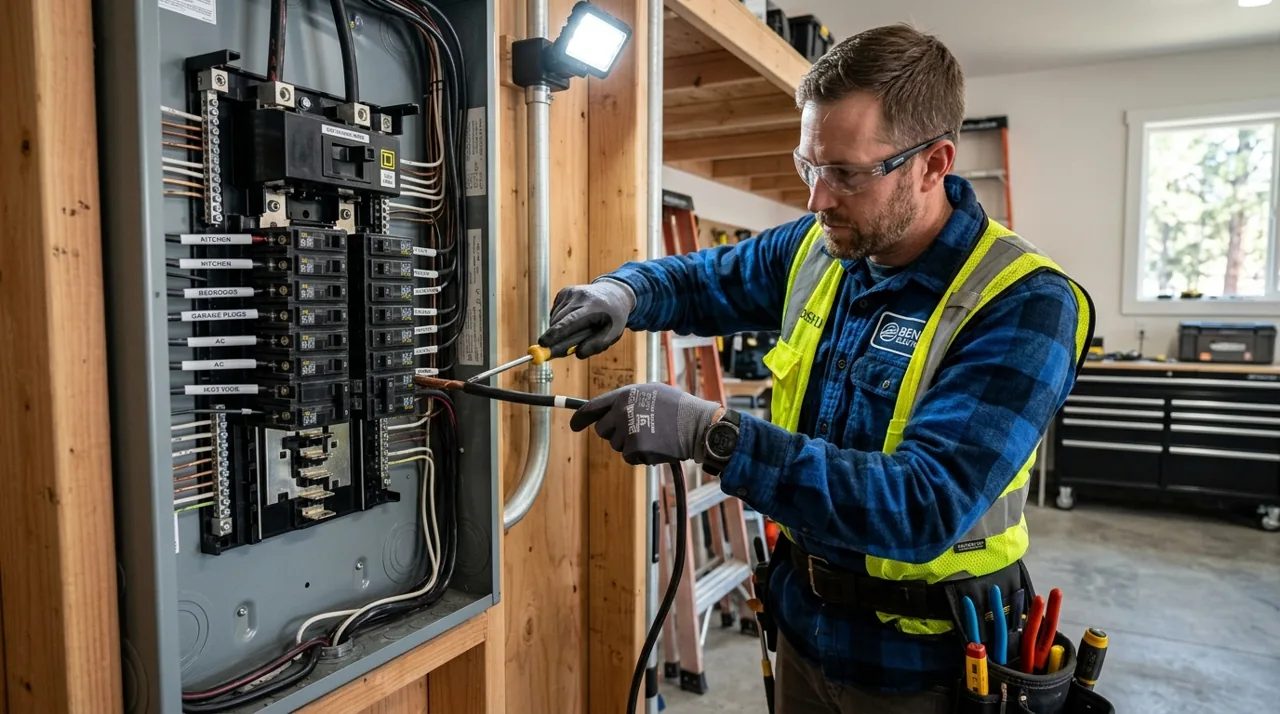
- ▸ Local Solution: Hardwired 48A continuous Level 2 EV charger installation requires a dedicated 60A double-pole circuit breaker and 99.9% oxygen-free 6 AWG THHN copper conductors inside EMT conduit under NEC 2023 Article 625. installed by Oregon CCB #248910 master electricians.
- ▸ Pricing Estimate: $850 - $1,450 complete installed cost before Pacific Power Oregon utility rebates. ($500 Pacific Power Oregon Instant Cash-Back Rebate + $1,000 Income-Qualified Rebate (Handled directly by licensed Oregon CCB #248910 electrician).).
- ▸ Trade Recommendation: Always specify 6 AWG THHN copper wire in EMT conduit over Romex NM-B 6/3 due to NM-B 55A temperature rating limits under NEC 334.80. with 100% permit sign-off.
Technical Specifications & NEC 2023 Engineering Matrix
| Technical Specification | Verified Engineering Standard |
|---|---|
| Continuous Power Output | 48 Amps Continuous (11.52 kW at 240V AC) |
| Circuit Breaker Rating | 60 Amp 2-Pole 240V Non-CTL (NEC 625.42 125% Rule) |
| Wire Conductor Gauge | 6 AWG THHN Copper (65A Ampacity at 75°C Terminals) |
| Conduit Requirement | 3/4-inch EMT Conduit (Max 40% Conduit Fill Rule) |
| Voltage Drop Limit | 1.47% at 75 Feet Run (240V AC Single Phase) |
| Municipal Permit | City of Bend Building Safety Division Electrical Permit |
| Utility Incentive | $500 - $1,000 Pacific Power Residential Incentive |
NEC 2023 Article 625 Continuous Duty Load Rule (48A Continuous vs 60A Breaker Math)
When calculating residential electrical load capacity for EV charger installation in Bend OR homes, electrical contractors must distinguish between continuous current rating and overcurrent protection device (OCPD) rating. A 48-amp EVSE (such as the Tesla Wall Connector Gen 3, ChargePoint Home Flex, or Emporia Level 2) draws a constant 48 amperes at 240 volts AC, delivering 11.52 kilowatts of charging power per hour. Under standard non-continuous load conditions, an electrical circuit can operate at 100% of its rated capacity. However, because EV charging sessions frequently span 6 to 10 hours overnight during Central Oregon cold snaps, thermal accumulation inside the main panelboard increases electrical resistance. Installing a 50-amp circuit breaker on a 48-amp continuous EV charger violates NEC 625.42 and results in repeated thermal tripping after 45 to 90 minutes of continuous charging. The 50A breaker operates at 96% of its continuous thermal threshold, generating excessive internal heat that degrades the bimetallic strip inside the breaker assembly. Licensed Oregon electrical contractors (CCB #248910) mandate a dedicated 60A double-pole 240V breaker installed directly into the main service panelboard or a subpanel rated for continuous duty.
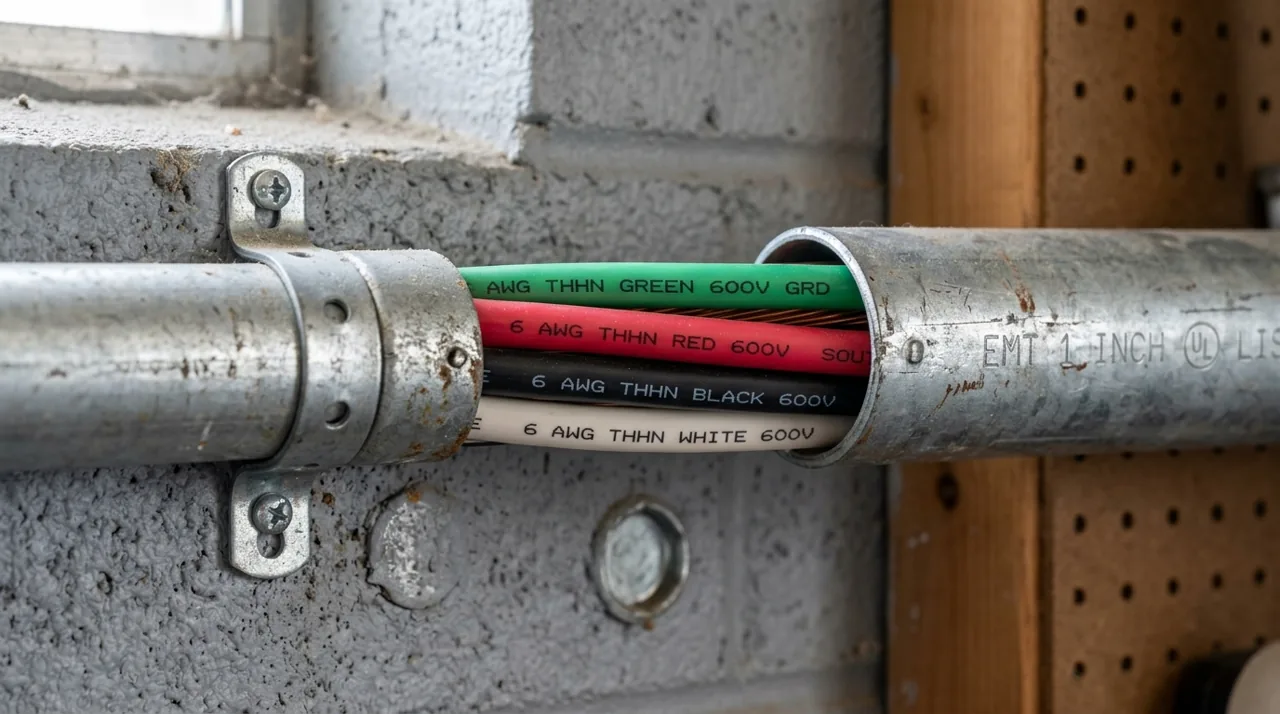
6 AWG THHN Copper vs 6/3 Romex NM-B Conductor Ampacity & Thermal Limits
Conductor selection for 240-volt EV charging in Deschutes County requires analyzing terminal temperature ratings, insulation jacket thermal thresholds, and physical conduit protection. Under NEC Table 310.16, 6 AWG copper wire with THHN/THWN-2 insulation is rated for 75 Amps in the 90°C column and 65 Amps in the 75°C column. Because circuit breaker pressure wire connectors and EVSE lug terminals are UL-listed for 75°C maximum operating temperature, 6 AWG THHN copper wire is evaluated at 65 Amps ampacity—providing a 5-amp safety margin above the 60A breaker rating. In contrast, non-metallic sheathed cable (NM-B / Romex) contains paper wrapping and PVC sheathing that traps heat. NEC Article 334.80 mandates that NM-B cable must be sized using the 60°C temperature column, regardless of the individual conductor insulation rating. For 6 AWG NM-B, the 60°C ampacity limit is exactly 55 Amps. Installing 6/3 Romex NM-B on a 60A circuit breaker violates Oregon Electrical Specialty Code (OESC) and poses a severe electrical fire hazard. In Central Oregon residential installations, licensed electricians pull three individual 6 AWG THHN copper conductors (Black Phase A, Red Phase B, White Neutral if required) plus one 10 AWG green equipment grounding conductor (EGC) inside rigid EMT metal conduit or Schedule 80 PVC conduit.
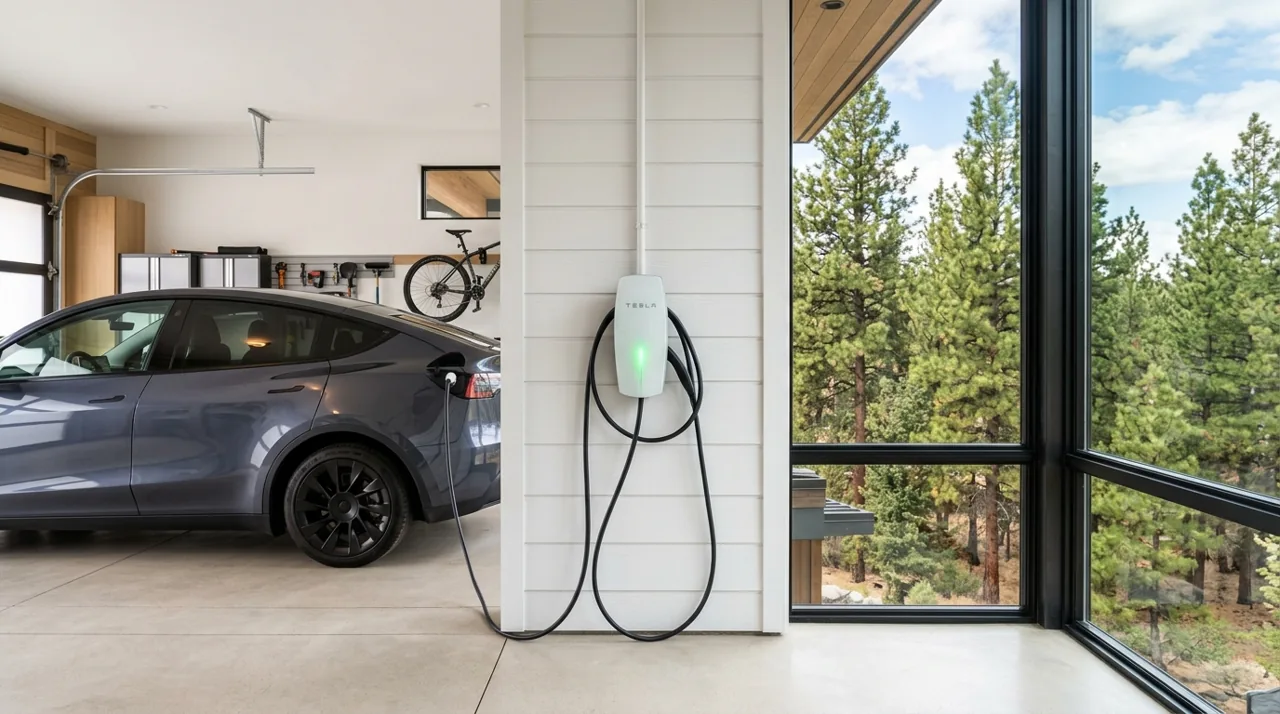
Voltage Drop Calculations & 75-Foot Conduit Runs in Deschutes County Homes
In Bend, Redmond, and Sunriver, residential garages are frequently detached or located on the opposite side of the home from the main 200A electrical service entrance. Running 240V branch circuits across finished attics, crawlspaces, or underground trenches increases total circuit length. Calculating voltage drop is essential to ensure the EV charger receives clean 240V AC power without causing low-voltage fault codes on vehicle onboard chargers. The single-phase AC voltage drop formula is expressed as: Voltage Drop (V) = (2 x K x I x L) / CM, where K is the direct current resistance constant of copper (12.9 Ohms per mil-foot), I is continuous current (48 Amps), L is one-way circuit length in feet, and CM is circular mil area of the conductor (26,240 CM for 6 AWG). For a typical 75-foot branch circuit run in a Deschutes County home, the calculated voltage drop is: (2 x 12.9 x 48 x 75) / 26,240 = 3.53 Volts. Expressed as a percentage of nominal 240V service: (3.53 / 240) x 100 = 1.47% voltage drop. For runs exceeding 110 feet in La Pine or rural Sisters properties, electricians upsize the conductors to 4 AWG THHN copper (R = 0.308 Ohms per 1000 ft) to keep voltage drop under 1.8%.
Electrical Panel Load Calculations (NEC Article 220) for Bend Homes
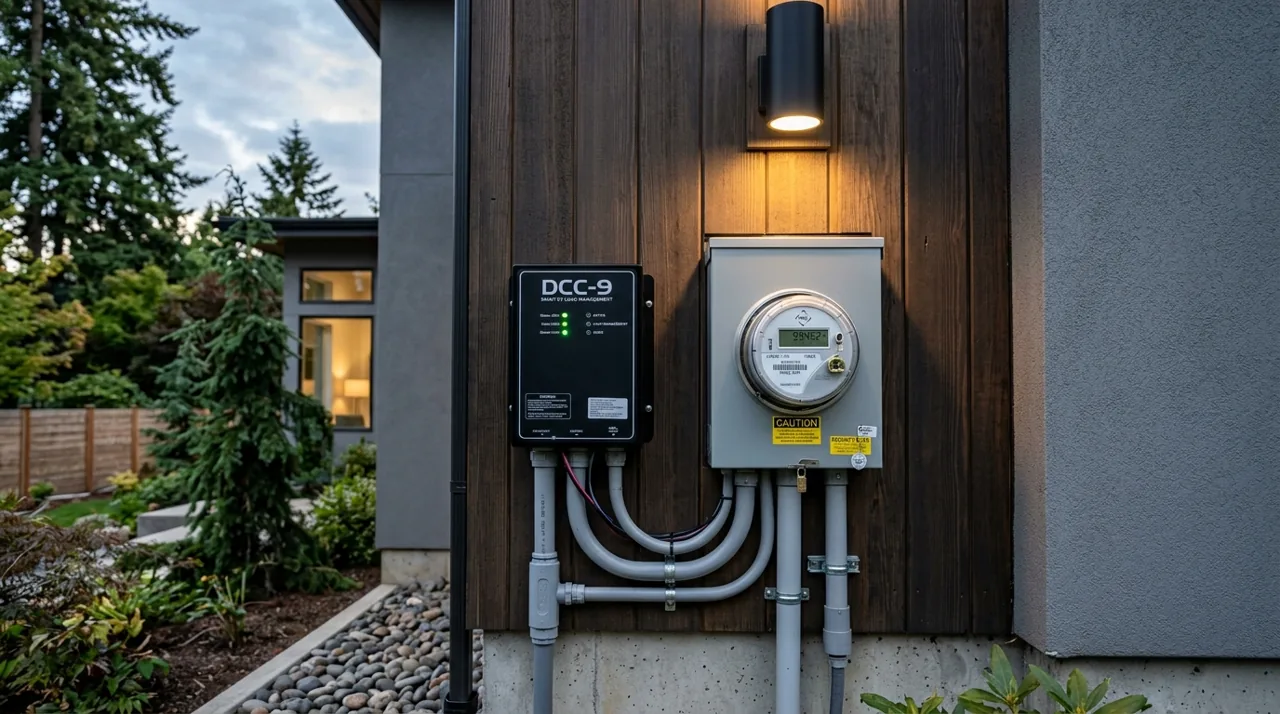
Many Bend neighborhoods constructed prior to 2005 (such as Larkspur, Mountain View, and Midtown) feature 100A or 125A main service panels. When homeowners purchase an electric vehicle, adding a 60A dedicated circuit represents 60% of the total main panel nameplate capacity. Performing an official load calculation under NEC 220.83 (Optional Calculation for Existing Dwelling Units) is mandatory before pulling a City of Bend electrical permit. The load calculation aggregates square footage general lighting (3 volt-amperes per sq ft), small appliance circuits (1,500 VA each), laundry circuits (1,500 VA), nameplate ratings of fixed appliances (electric ovens, dryers, heat pumps, hot tubs), and applies demand factors (100% of first 10 kVA + 40% of remainder). The 48A continuous EV load is added at 125% rating (14,400 VA). If total calculated demand exceeds 80 Amps on a 100A main breaker, the installation requires either: 1) A full 200A service entrance upgrade with Pacific Power meter socket replacement, or 2) A smart load shedding device (such as the DCC-9 EV Energy Manager or Wallbox Energy Meter) that automatically disconnects the EV charger whenever total home power consumption approaches panel limits.
City of Bend & Deschutes County Building Safety Permit & Inspection Protocols
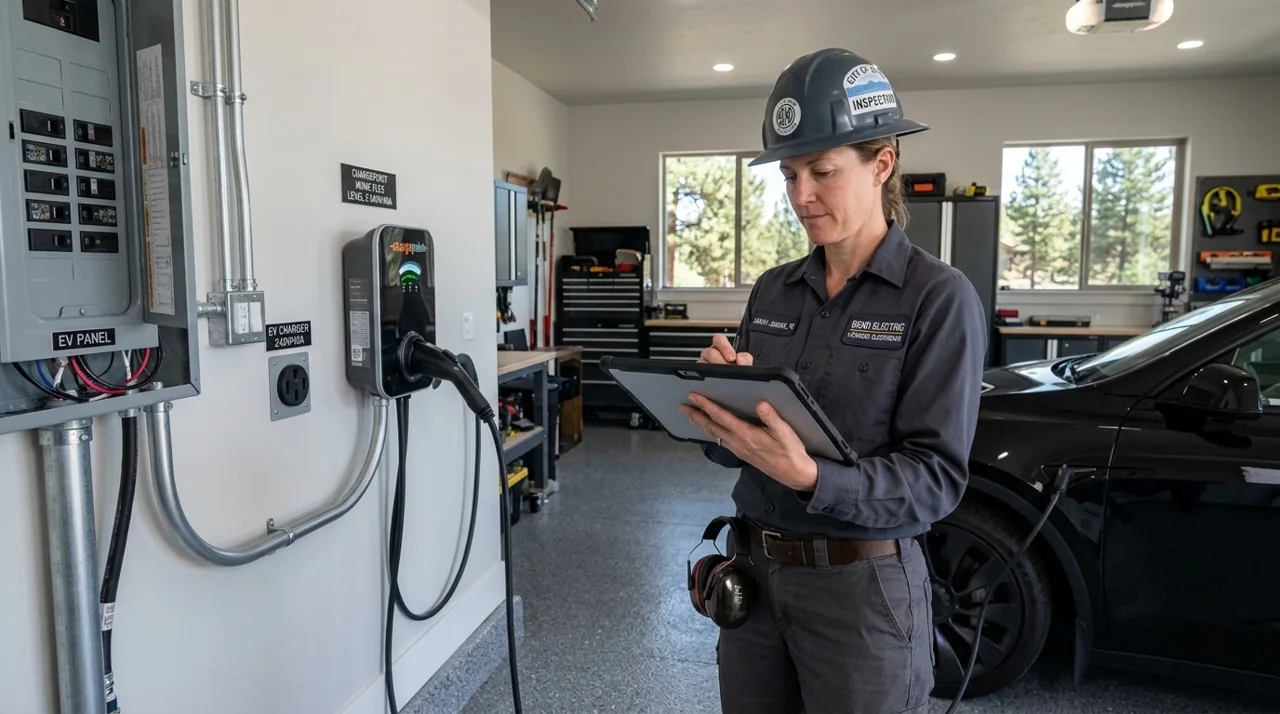
Filing for a trade permit in Central Oregon is conducted through the Oregon ePermitting online portal. Licensed electrical contractors submit single-line wiring diagrams, panel schedule load calculations, and equipment specifications before commencing work. Unpermitted 240V electrical installations pose severe legal, insurance, and safety liabilities for homeowners in Deschutes County. During the municipal electrical inspection, the City of Bend inspector reviews five critical technical checkpoints: 1) Breaker rating matching wire ampacity (60A breaker on 6 AWG THHN copper), 2) Terminal torque setting compliance using a calibrated torque screwdriver (typically 45 to 50 in-lbs on main panel lugs), 3) Conduit support intervals (EMT straps installed within 3 feet of every box and every 10 feet along runs under NEC 358.30), 4) Expansion fittings for conduit penetrating exterior walls to withstand Central Oregon frost heave, and 5) Proper green EGC ground bonding at both panel and EVSE enclosure. Upon successful inspection, the municipal inspector uploads the official Certificate of Inspection sign-off, which is required to claim Oregon utility rebates.
Pacific Power Oregon $500–$1,000 Utility Rebate Claim Walkthrough (2026)
Pacific Power's Oregon EV Charging Incentive Program provides significant financial relief for Central Oregon homeowners upgrading to 48A Level 2 charging. The rebate applies to both equipment purchase costs and contractor labor fees for hardwired EVSE installations. To ensure 100% approval, licensed electrical contractors assist homeowners with the 4-step Pacific Power claim process: 1) Purchase an ENERGY STAR qualified hardwired EVSE (Tesla Wall Connector, ChargePoint Home Flex, or JuiceBox 48), 2) Have the unit installed by an active Oregon CCB #248910 licensed contractor with municipal permit sign-off, 3) Upload itemized contractor invoices showing line-item wire gauge, breaker sizing, and permit fees to the Pacific Power portal within 60 days of installation, and 4) Receive direct check reimbursement or utility bill credit within 3 to 4 weeks. Additionally, residential installations qualify for the Federal Section 30C Alternative Fuel Infrastructure Tax Credit, covering 30% of remaining out-of-pocket costs up to $1,000.
🛡️ Honest DIY Threshold: When You Do NOT Need a Paid Electrician
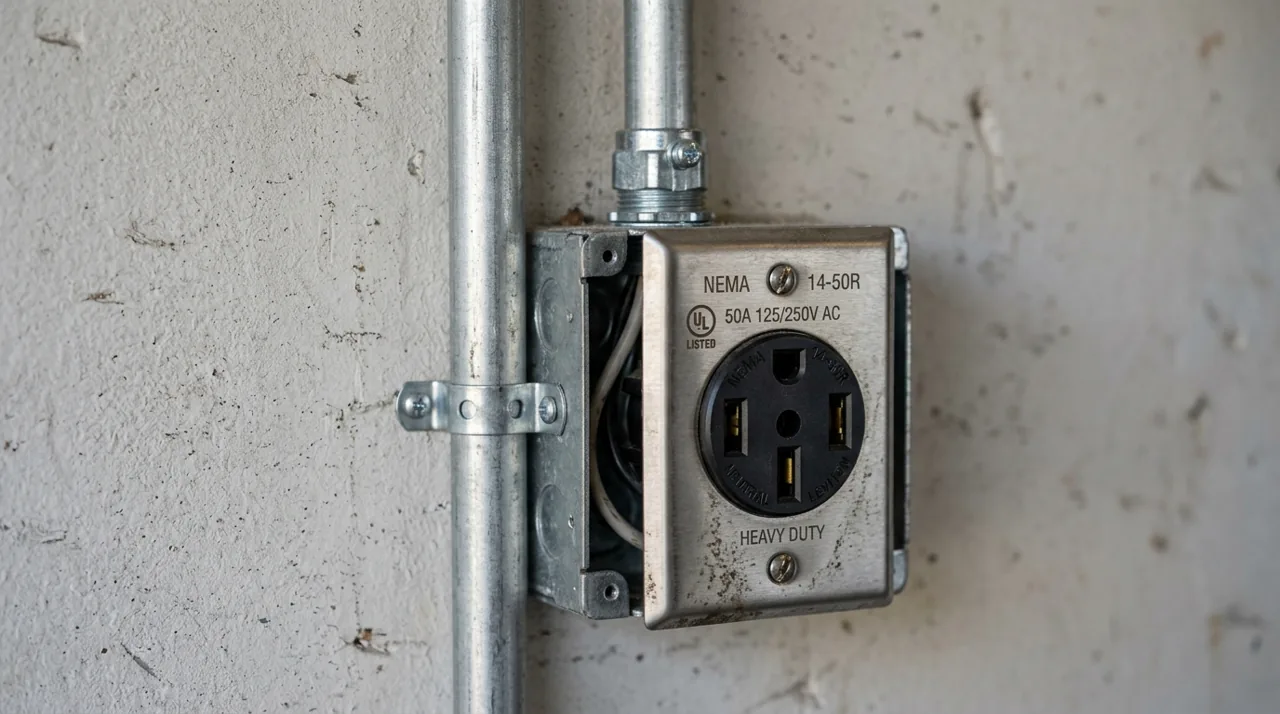
If your garage already has an existing, unshared 240V NEMA 14-50 outlet wired with 6 AWG copper back to a 50A breaker, and your EV charging needs are satisfied at 32A or 40A (charging overnight in 8 hours), you do NOT need to hire us or pay for a new circuit installation. Simply purchase a plug-in Level 2 charger and plug it directly into your existing NEMA 14-50 outlet. You only need to call a licensed electrical contractor if: 1) You want continuous 48A fast charging on a 60A breaker, 2) Your panel requires a load calculation or 200A upgrade, or 3) You need a City of Bend municipal permit sign-off for the $500 Pacific Power rebate.
EV Electrician in Bend & Central Oregon
Speak directly with Oregon CCB licensed master electricians serving Bend & Central Oregon and surrounding corridors.