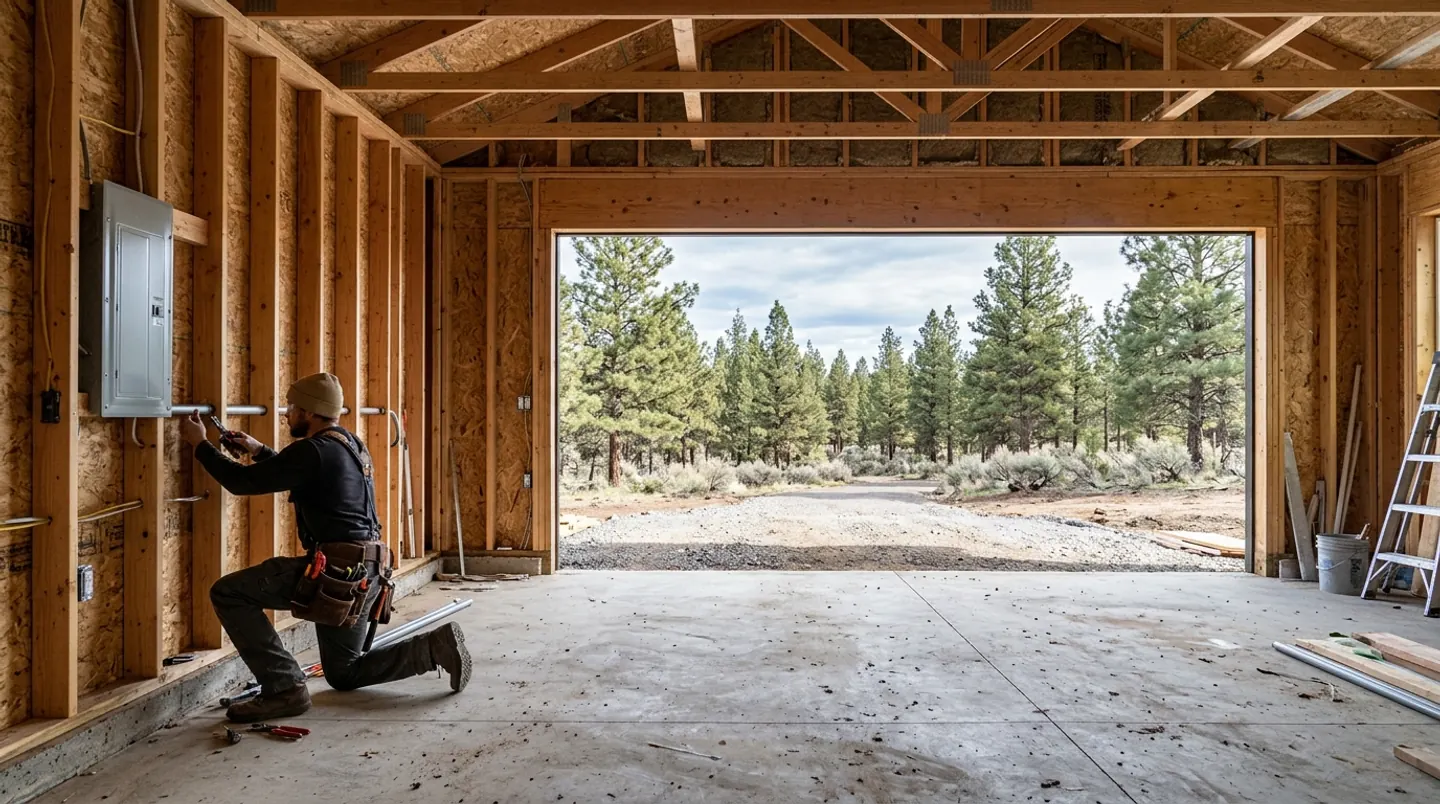
- ▸ Local Solution: For most new single-family homes in Oregon, EV-ready wiring is not a legal requirement -- it's a smart optional upgrade your electrician builds in while the walls are still open installed by Oregon CCB #248910 master electricians.
- ▸ Pricing Estimate: Fixed quote after a free on-site or phone assessment -- pre-wiring during framing costs far less than retrofitting after drywall is up (local utility cash-back rebate handled directly by electrician if you charge at the same time as your main install).
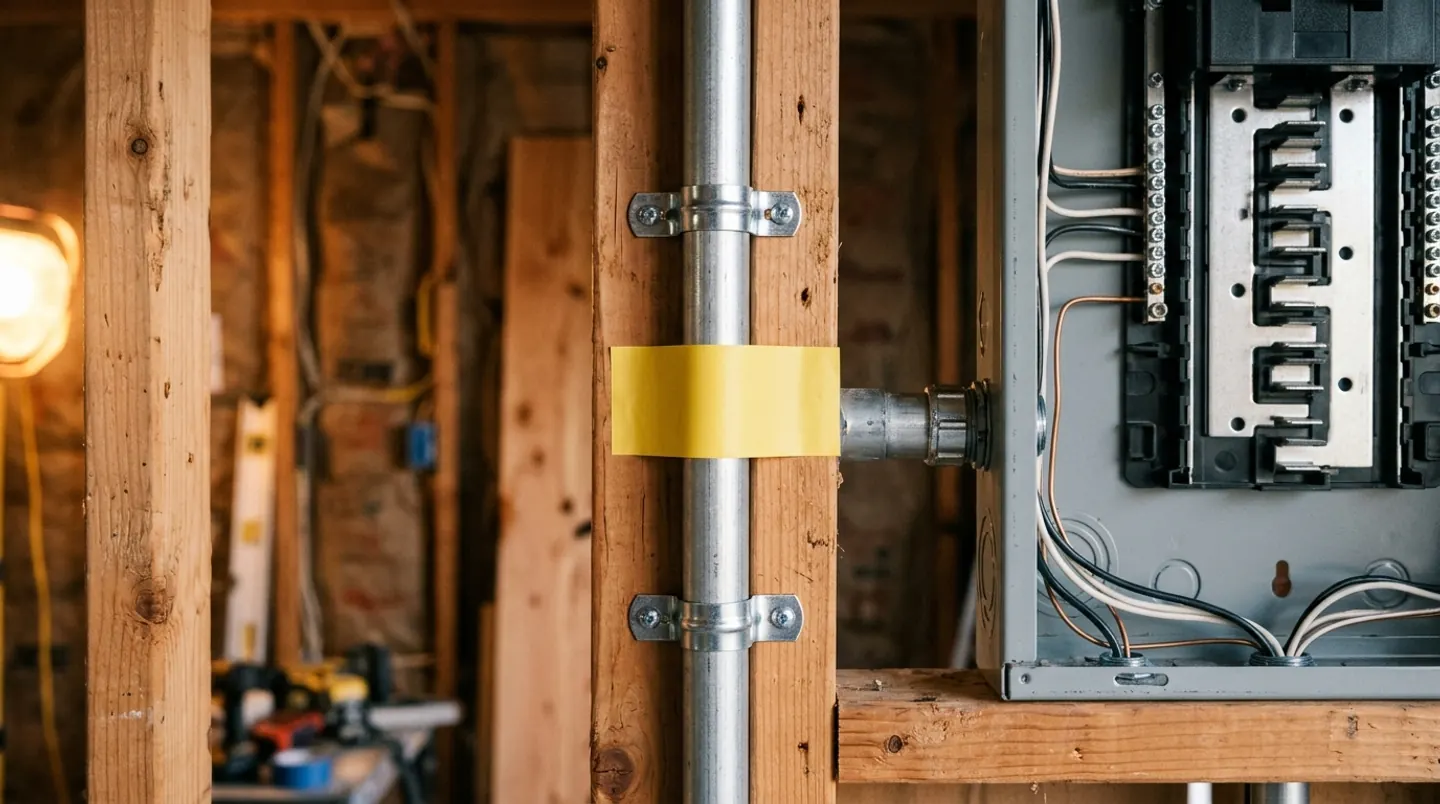
- ▸ Trade Recommendation: Ask your builder for a labeled 3/4-inch EMT conduit stub from the panel to the garage during rough-in, even though it isn't required with 100% permit sign-off.
Technical Specifications & NEC 2023 Engineering Matrix
| Technical Specification | Verified Engineering Standard |
|---|---|
| Governing Rule | OAR 918-020-0380 (Oregon Administrative Rules) |
| Effective Date | October 1, 2017 |
| Who It Actually Binds | New parking facilities with 50+ open spaces, Occupancy Groups B, M, R-2, S-2 |
| Single-Family (R-3) Homes | Not covered by this rule |
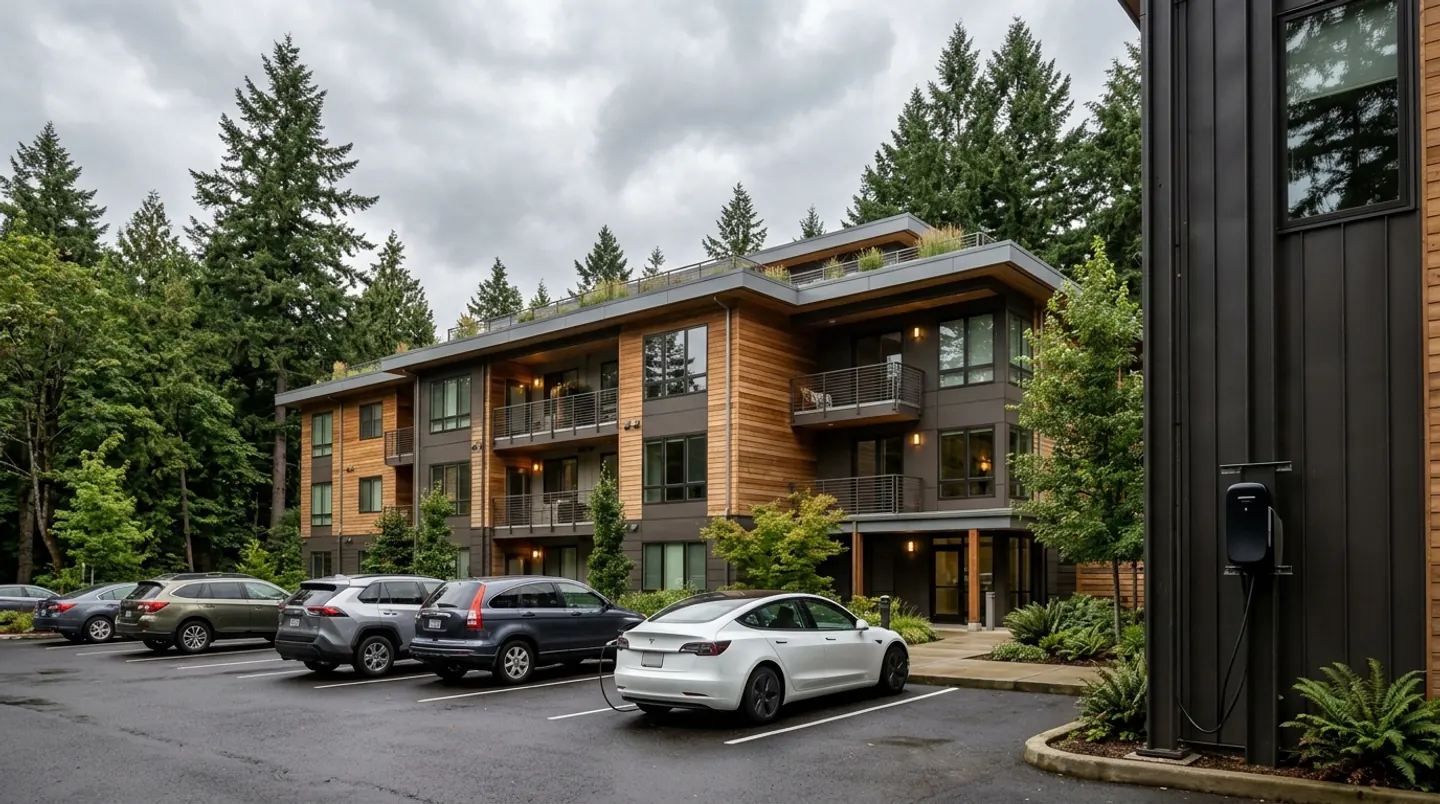
| Confirmed Mandatory Cities | Eugene, Salem, Portland, Gresham |
| Required Infrastructure | Labeled conduit sized for future Level 2 EVSE (40A / 3.3-6.6 kW or larger) |
| Coverage Requirement | 5% of qualifying open parking spaces |
| Local Adoption | Other Oregon cities may opt in under OAR 918-020-0370 -- confirm with your local building department |
What Oregon's EV-Ready Rule Actually Covers (And Doesn't)
The actual rule, OAR 918-020-0380, only kicks in for new parking facilities with 50 or more open parking spaces, in a specific set of occupancy types: think large apartment buildings, offices, and retail centers, not a driveway. When it applies, the building has to install a labeled conduit system from the electrical service to the open parking spaces, sized to eventually carry a Level 2 charging circuit (40 amps / 3.3 to 6.6 kW or larger), covering 5% of the qualifying spaces. There's no single magic wire gauge baked into the rule -- it's performance-based, sized for the load a building owner expects to add later.
Where This Is Actually Mandatory: Eugene and Salem
Bend, Redmond, Sisters, Sunriver, La Pine, Corvallis, Prineville, Madras, and Philomath aren't on that mandatory list by default, though a city can locally adopt the same rule under OAR 918-020-0370. If you're developing a large multi-unit project outside Eugene or Salem, that's a five-minute phone call to your local building department worth making before you assume either way -- cheaper than finding out at final inspection.
Why Pre-Wire Your Single-Family Home Anyway
Ask for it during the rough-in electrical phase, even if your builder has never heard of OAR 918-020-0380. Most haven't. There's no reason they would have -- it doesn't apply to them, and that's exactly why nobody brings it up unless the homeowner does.
What To Actually Ask Your Builder For
If your builder pushes back or isn't sure what you're asking for, that's exactly the kind of five-minute conversation a licensed electrician can have directly with them during framing -- a lot easier than a change order after the fact.
The Portland Wrinkle (So You're Not Surprised By It Later)
That's a Portland-specific rule under its own Title 33 zoning code, not a statewide one, and it doesn't apply anywhere we serve. We mention it only because it's the version of this topic that search results tend to surface first, and we'd rather you hear the version that's actually relevant to your project.
🛡️ Honest DIY Threshold: When You Do NOT Need a Paid Electrician
If your garage already has an existing, unshared 240V NEMA 14-50 outlet wired with 6 AWG copper back to a 50A breaker, and your EV charging needs are satisfied at 32A or 40A (charging overnight in 8 hours), you do NOT need to hire us or pay for a new circuit installation. Simply purchase a plug-in Level 2 charger and plug it directly into your existing NEMA 14-50 outlet. You only need to call a licensed electrical contractor if: 1) You want continuous 48A fast charging on a 60A breaker, 2) Your panel requires a load calculation or 200A upgrade, or 3) You need a municipal permit sign-off to claim your local utility rebate.
EV Electrician in Bend & Central Oregon
Speak directly with Oregon CCB licensed master electricians serving Bend & Central Oregon and surrounding corridors.