🏡 100% HOA ARB APPROVED & PERMIT FAST-TRACKED IN CENTRAL OREGON CALL: (888) 534-4943
EV Charger One Certified Electrical Network
HOA & Condo Installations • 8 min read • Bend & Central Oregon Hub

Can My HOA Stop Me From Installing an EV Charger?

TL;DR / Quick Executive Summary: Hardwired 48A continuous Level 2 EV charging in Bend & Central Oregon requires a dedicated 60A 2-pole breaker and 6 AWG THHN copper wire inside EMT conduit under NEC 625.42. Romex 6/3 NM-B is strictly limited to 55A (60°C column) and cannot legally be used. Your local utility provider's cash-back rebate is handled directly by our licensed Oregon CCB #248910 electricians.

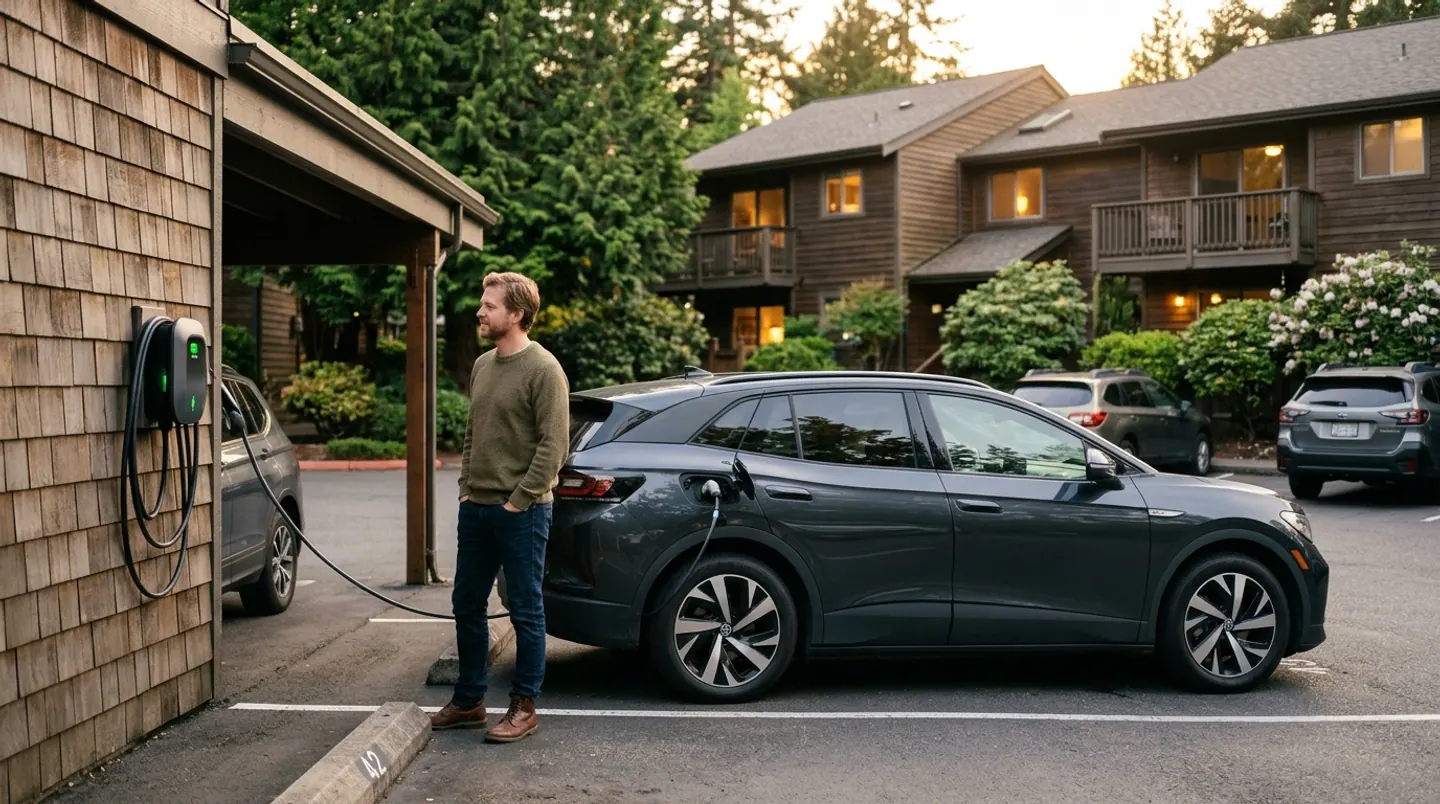
Homeowner at a townhome complex with a newly approved EV charger installed in their parking space
⚡ Figure 1: Approved EV Charger Installation at a Central Oregon Condo Complex Oregon CCB #248910 Verified
⚡ QUICK SERVICE SUMMARY (BEND & CENTRAL OREGON):
  • ▸ Local Solution: Oregon law (ORS 94.762) does not let your HOA simply say no to a compliant EV charger -- it gives you real statutory footing, not just a polite request installed by Oregon CCB #248910 master electricians.
  • ▸ Pricing Estimate: Fixed quote after a free on-site or phone assessment (local utility cash-back rebate handled directly by electrician).
  • ▸ Trade Recommendation: Submit a complete, specific request -- the 60-day approval clock only starts once your application is actually complete with 100% permit sign-off.

Technical Specifications & NEC 2023 Engineering Matrix

Technical Specification Verified Engineering Standard
Governing Statute ORS 94.762 (Oregon Revised Statutes)
Core Protection HOA may not prohibit installation or use of a compliant EV charger
Mandatory Review Window 60 days from a complete application
If the HOA Delays Must be a specific, reasonable request for more information, not an open-ended stall
Ownership Charger is the owner's personal property unless otherwise agreed
Dispute Costs Prevailing party in an enforcement action can recover attorney fees and costs
What the HOA Can Still Regulate Reasonable placement and aesthetic conditions -- not an outright ban
⚡ Single-Line Electrical Schematic: 60A Breaker to 48A Hardwired EVSE NEC 2023 FIG 625.42
[200A Main Service Panel] ──(60A 2-Pole Breaker)──► [3/4" EMT Conduit / 6 AWG THHN Copper] ──► [Hardwired 48A Level 2 EVSE]
Phase A: 6 AWG Black (120V)
Phase B: 6 AWG Red (120V)
Ground: 10 AWG Green EGC

What Oregon Law Actually Says (ORS 94.762)

In short: Here's the short version: your HOA cannot simply refuse to let you install a compliant EV charger. Oregon Revised Statute 94.762 specifically prohibits a homeowners association from banning the installation or use of an EV charging station that meets the statute's conditions -- this isn't a courtesy the board is extending you, it's written into state law.

That doesn't mean the board has zero say. They can still set reasonable conditions on where and how it's installed -- placement, aesthetics, that kind of thing -- just not a flat no. And once you submit a complete application, the association has 60 days to approve it or come back with a specific, reasonable request for more information. An open-ended 'we'll get back to you' past that window isn't really how the law is supposed to work. One honest caveat: we're citing the statute as it appears on public legal-reference sites rather than pulling the text directly from the Oregon Legislature's own site, so if anything here is mission-critical for an actual dispute, have your own attorney confirm the current official text -- laws get amended, and we'd rather point you to the primary source than be the last word on it.

Preparing an HOA architectural request for an EV charger installation
⚡ Figure 2: Preparing a Complete HOA Request Under ORS 94.762 NEC 625 Code Compliant

What Your Electrician Checks Before You Even Talk to the HOA

In short: Before you submit anything, it's worth having an electrician actually look at your unit's electrical setup -- especially in a condo or townhome where your panel might share infrastructure with the building, or where a shared meter room serves multiple units.

We check three things: whether your unit's panel has spare capacity for a 40 to 60 amp circuit, whether the run from your panel to your parking space is short and simple or long and expensive, and whether there's a shared electrical room (which changes who has to approve what, and sometimes who pays for what). Walking into your HOA request with 'here's exactly what we need and here's why' is a very different conversation than 'can I maybe get a charger.'
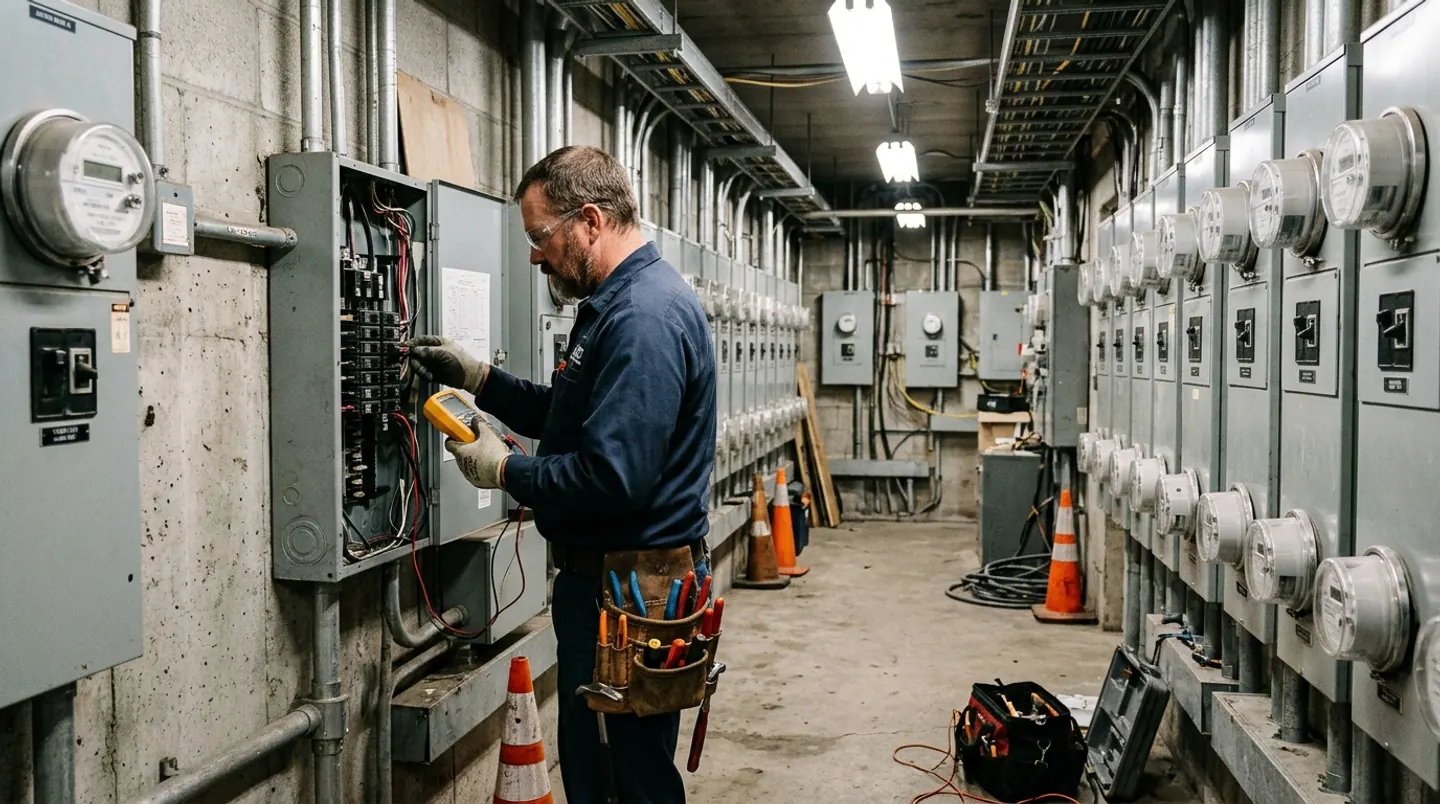
Licensed electrician inspecting a shared multi-unit electrical panel for EV charger capacity
⚡ Figure 3: Checking Shared Panel Capacity Before Submitting Your Request NEC 625 Code Compliant

What to Actually Put in Your Request

In short: The statute protects your right to install, but it doesn't write your paperwork for you. A request that gets approved on the first pass -- not bounced back with questions -- usually includes: the specific make and mounting location of the charger, who's doing the installation (a licensed electrician, not a cousin with a drill), proof of insurance for the work, and a clear statement that the charger will be your personal property, maintained at your expense.

That last part matters more than it sounds like it should. Boards get nervous about open-ended liability, and spelling out that you own and maintain the equipment answers the question before anyone has to ask it.

If the HOA Still Says No (or Goes Quiet)

In short: If your association denies a compliant request outright, or just doesn't respond within that 60-day window, you're not out of options -- but you are now in 'talk to a real estate attorney' territory, not 'talk to an electrician' territory. ORS 94.762 lets the prevailing party in an enforcement action recover attorney fees and costs, which is a meaningful deterrent against a board stonewalling a compliant request out of pure inertia.

In practice, most of what we see is boards that are slow or unfamiliar with the law, not boards acting in bad faith. A polite follow-up that cites the statute by number tends to move things along faster than you'd expect.

The One Thing Oregon Law Doesn't Give You

In short: ORS 94.762 protects your right to install a charger -- it doesn't obligate the HOA to pay for it, run the wiring for you, or guarantee your unit's electrical service has room for one. If your panel is maxed out or your unit is served by an undersized shared feeder, that's still a real electrical problem the statute doesn't solve, and it's exactly the kind of thing worth checking before you submit anything, not after.

ORS 94.762 protects your right to install a charger -- it doesn't obligate the HOA to pay for it, run the wiring for you, or guarantee your unit's electrical service has room for one. If your panel is maxed out or your unit is served by an undersized shared feeder, that's still a real electrical problem the statute doesn't solve, and it's exactly the kind of thing worth checking before you submit anything, not after.

⚡ BEND & CENTRAL OREGON DISPATCH

EV Electrician in Bend & Central Oregon

Speak directly with Oregon CCB licensed master electricians serving Bend & Central Oregon and surrounding corridors.

✓ 100% Trade Permitted
✓ 24-Hour Response Guarantee
✓ 99.9% Solid Copper Wire
Can My HOA Stop Me From Installing an EV Charger? FAQs (5 Answers)
// EXPERT GUIDANCE & FAQs

Can My HOA Stop Me From Installing an EV Charger? FAQs (5 Answers)

Clear, expert answers to key questions about Level 2 EV charging in Central Oregon.

Q1. Can an Oregon HOA Legally Refuse to Let Me Install an EV Charger? ▼

Not outright. ORS 94.762 prohibits an association from banning the installation or use of a compliant EV charging station, though the HOA can still set reasonable conditions on placement and aesthetics.

Q2. How Long Does My HOA Have to Approve My Request? ▼

60 days from a complete application, unless they come back with a specific, reasonable request for more information within that window.

Q3. Who Owns the Charger Once It's Installed? ▼

You do. Under ORS 94.762, a charger installed under this provision is the personal property of the lot or unit owner unless you and the association agree otherwise in writing.

Q4. What If My HOA Ignores My Request or Says No Anyway? ▼

You can pursue enforcement, and the statute allows the prevailing party to recover attorney fees and costs -- but most slow responses come from unfamiliarity with the law rather than bad faith, so a follow-up citing the statute by number often resolves it first.

Q5. Does This Law Mean My Building's Electrical System Can Handle a Charger? ▼

No. The statute protects your right to install, not your unit's electrical capacity. Have an electrician check your panel and the path to your parking space before you submit your request, not after it's approved.

⚖️ REGIONAL PRICING & TRADE DISCLOSURE — CENTRAL OREGON NEC Article 625 Code Compliant

Installation estimates provided on EV Charger One reflect standard 240V Level 2 residential garage installations in Central Oregon. Final project pricing is fixed upon on-site load calculation and varies based on main breaker panel distance, conduit runs, and service upgrades.

💰 Utility Rebate
Pacific Power Instant Cash-Back Rebate
🏛️ Municipal Permit
100% Trade Permit & Building Sign-Off Included
⚡ Contractor Network
Licensed Oregon Electrical Partners
⚡ FREE FIXED-PRICE ESTIMATE & REBATE FILING

Ready to Install Your EV Charger in Bend & Central Oregon?

We handle the utility rebate paperwork directly, so you get your cash-back without the hassle.

✓ Oregon Licensed Contractor Network ✓ 100% Permitted & Insured
CALL NOW FREE QUOTE →