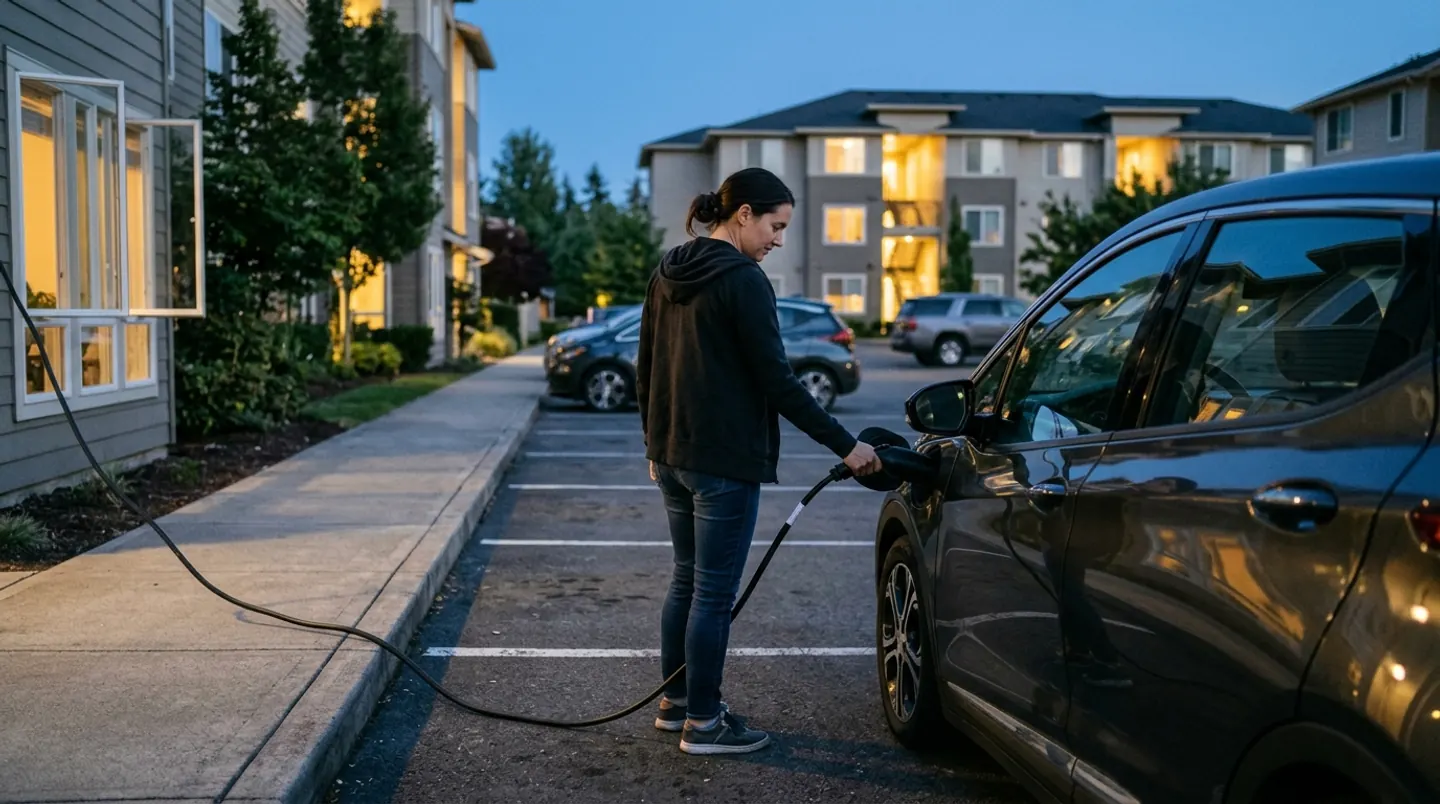
- ▸ Local Solution: Renters don't get the same statutory right condo owners have under Oregon's HOA law -- but a portable Level 2 charger or a simple landlord conversation solves it for most apartment dwellers without a dedicated installed circuit at all installed by Oregon CCB #248910 master electricians.
- ▸ Pricing Estimate: Fixed quote after a free on-site or phone assessment -- applies if your landlord approves a dedicated circuit (local utility cash-back rebate available if a dedicated circuit is installed with landlord permission).
- ▸ Trade Recommendation: Start with what's already at your unit (a standard 120V outlet) before assuming you need a major electrical project with 100% permit sign-off.
Technical Specifications & NEC 2023 Engineering Matrix
| Technical Specification | Verified Engineering Standard |
|---|---|
| Level 1 (120V) Charging Rate | Roughly 3-5 miles of range per hour |
| Level 2 Portable (240V) Charging Rate | Roughly 15-25 miles of range per hour, depending on circuit amperage |
| Renter's Legal Standing | No Oregon statute equivalent to ORS 94.762 protects renters -- purely a landlord agreement |
| Typical Minimum Circuit for Dedicated Level 2 | 40A dedicated circuit, if landlord approves a new install |
| What a Portable EVSE Needs | A dedicated, unshared outlet rated for its full continuous draw |
The Portable Charger Option Most Renters Don't Know About
The catch is speed: Level 1 charging adds roughly 3 to 5 miles of range per hour, which works fine if you're plugging in overnight and only driving a normal daily commute, and works badly if you're trying to refill a mostly-empty battery before tomorrow morning. If your daily driving is modest, this is genuinely the simplest answer, and it's the one most renters never think to just try first.
Asking Your Landlord or Property Manager (and What to Actually Propose)
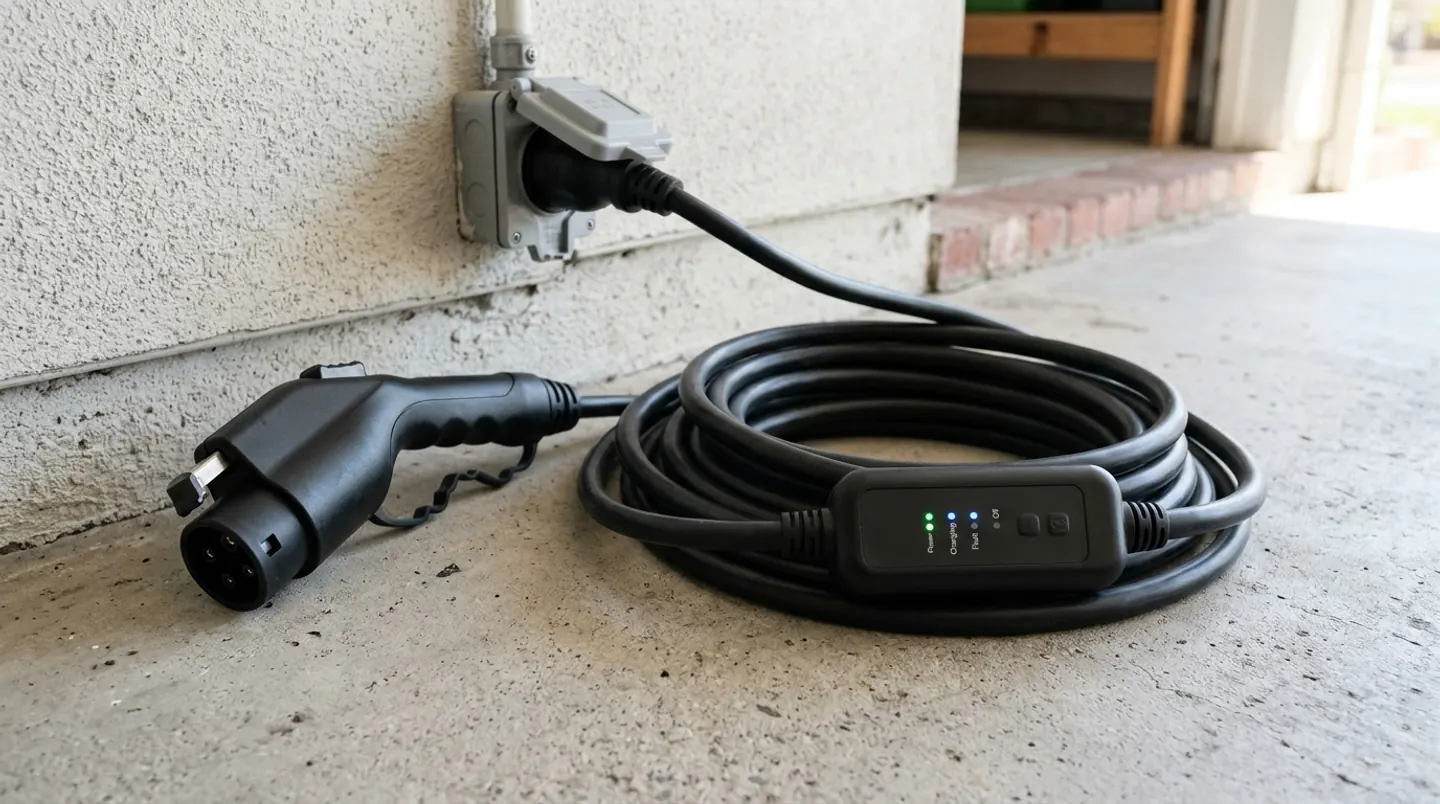
The easiest version to get a yes on: ask about using an existing outlet as-is, with zero changes to the property. If you do want a dedicated 240V circuit installed, propose it as a tenant-funded improvement with a simple written agreement about what happens to it when you move out -- landlords say yes far more often to 'I'll pay for it and we'll agree in writing what happens later' than to 'can you pay to upgrade my electrical.'
What a Standard 120V Outlet Can and Can't Do
If you're not sure whether an outlet is on a dedicated circuit, that's a five-minute thing an electrician can check for you, often without even needing to be inside your unit if it's an exterior or garage outlet tied to a visible panel.
If Your Complex Already Has Shared Charging Stations
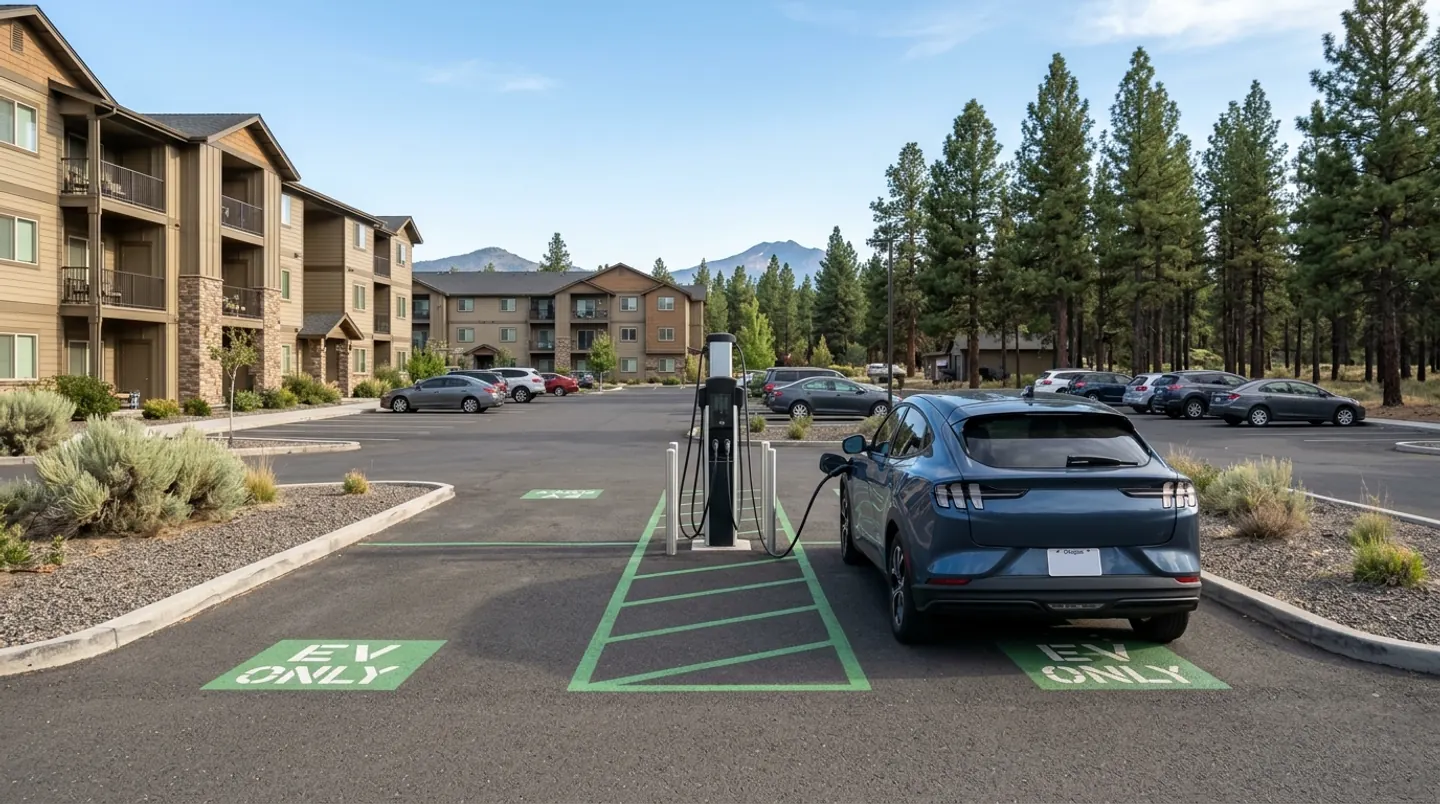
If yours does, that's your easiest path by far: no landlord negotiation needed, just a parking policy to check, since some complexes limit charging-stall parking to actual charging time, not all-day storage.
The Honest Trade-Off: Convenience vs. Cost
If you're genuinely unsure which makes sense for your situation, that's exactly the kind of five-minute phone call worth having with an electrician before you commit to either path.
🛡️ Honest DIY Threshold: When You Don't Need Any Electrician at All
If you already have access to a dedicated, unshared 120V outlet at your unit, you can plug in a portable Level 1 charger yourself -- no electrician, no landlord negotiation, no permit. You only need to call us if you're pursuing a dedicated 240V circuit, or if you're not sure whether an outlet is actually on its own unshared circuit (that one's worth a quick check before you rely on it for 8 hours of continuous draw).
EV Electrician in Bend & Central Oregon
Speak directly with Oregon CCB licensed master electricians serving Bend & Central Oregon and surrounding corridors.